so uoo op that sinks in
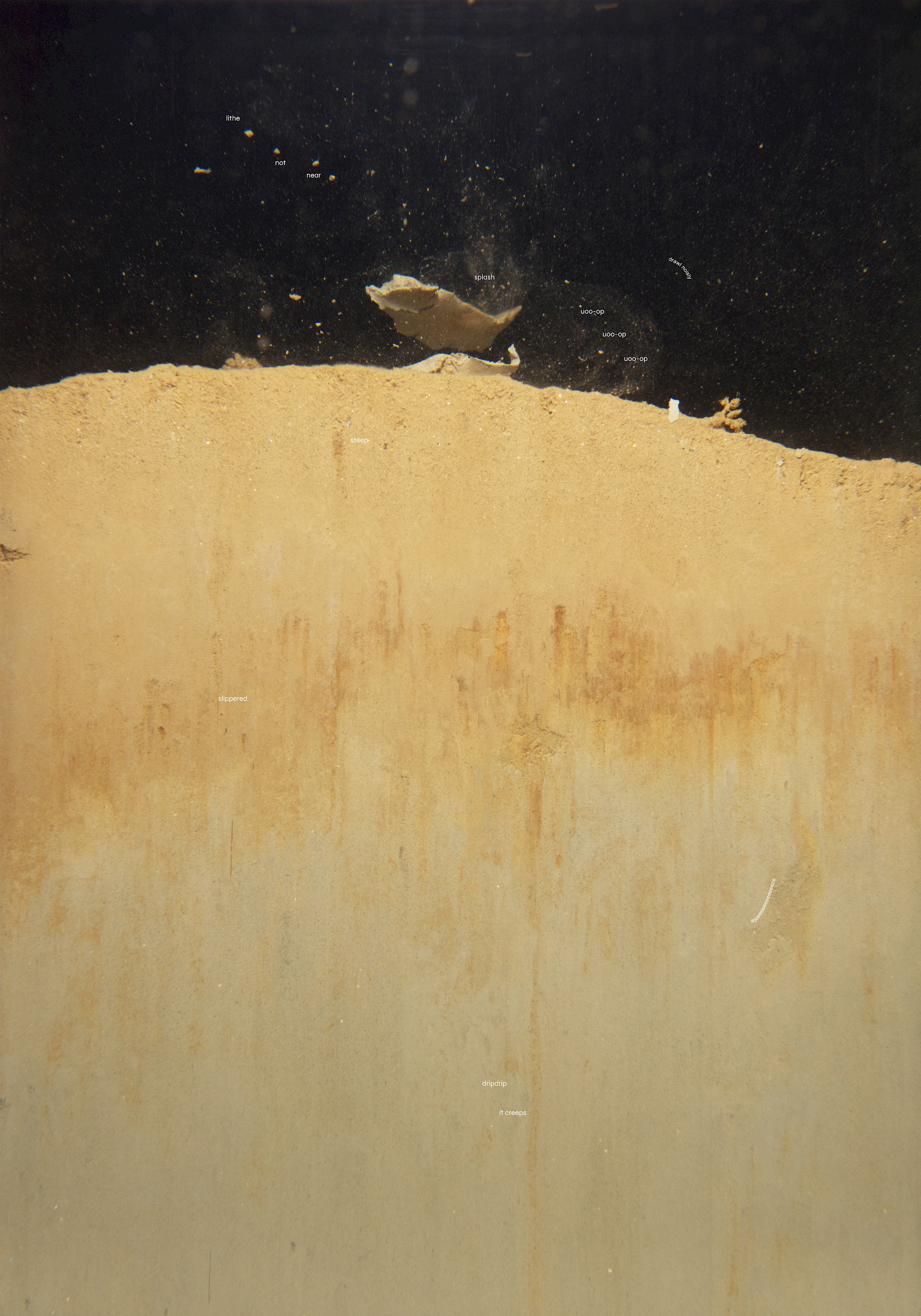
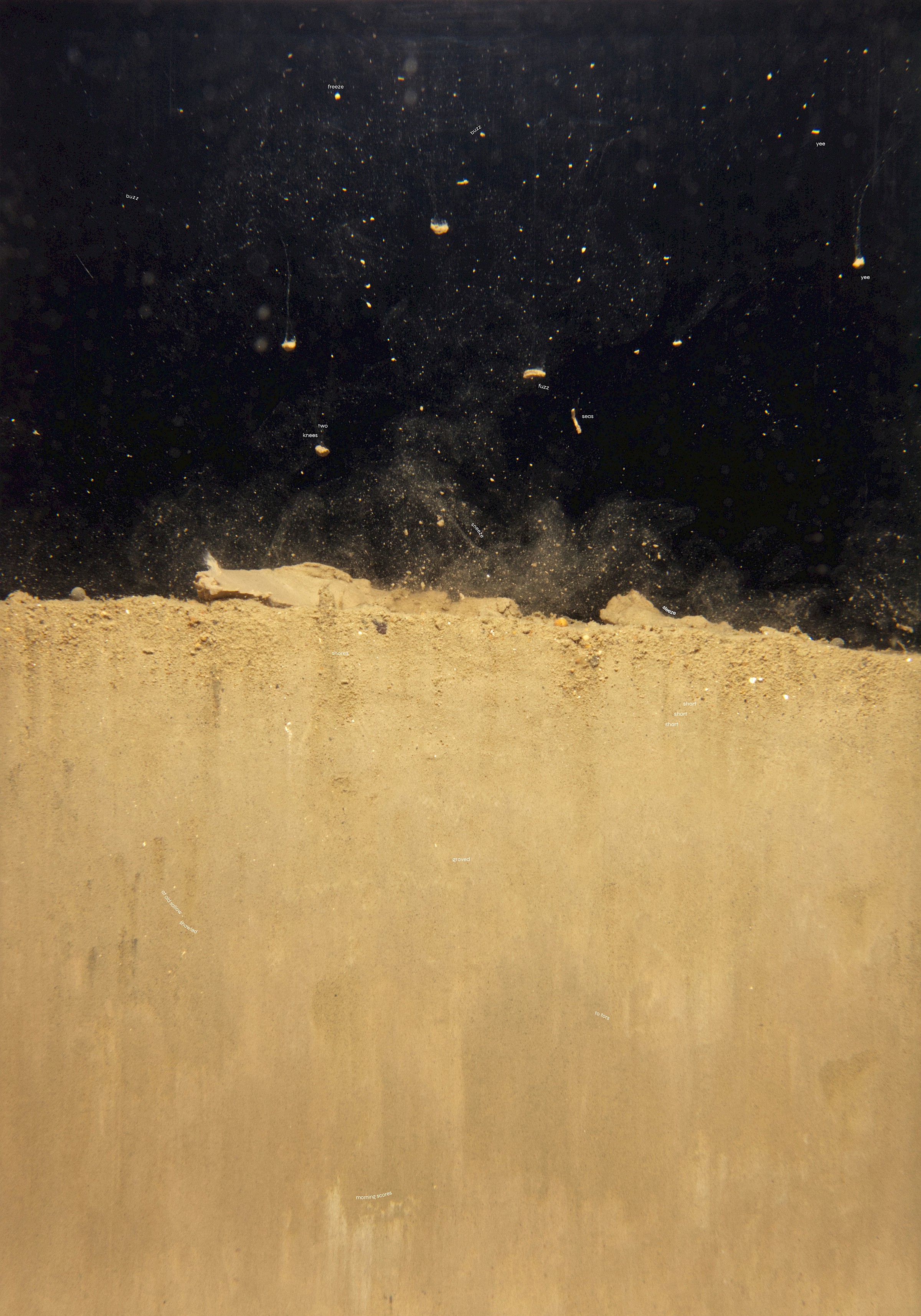
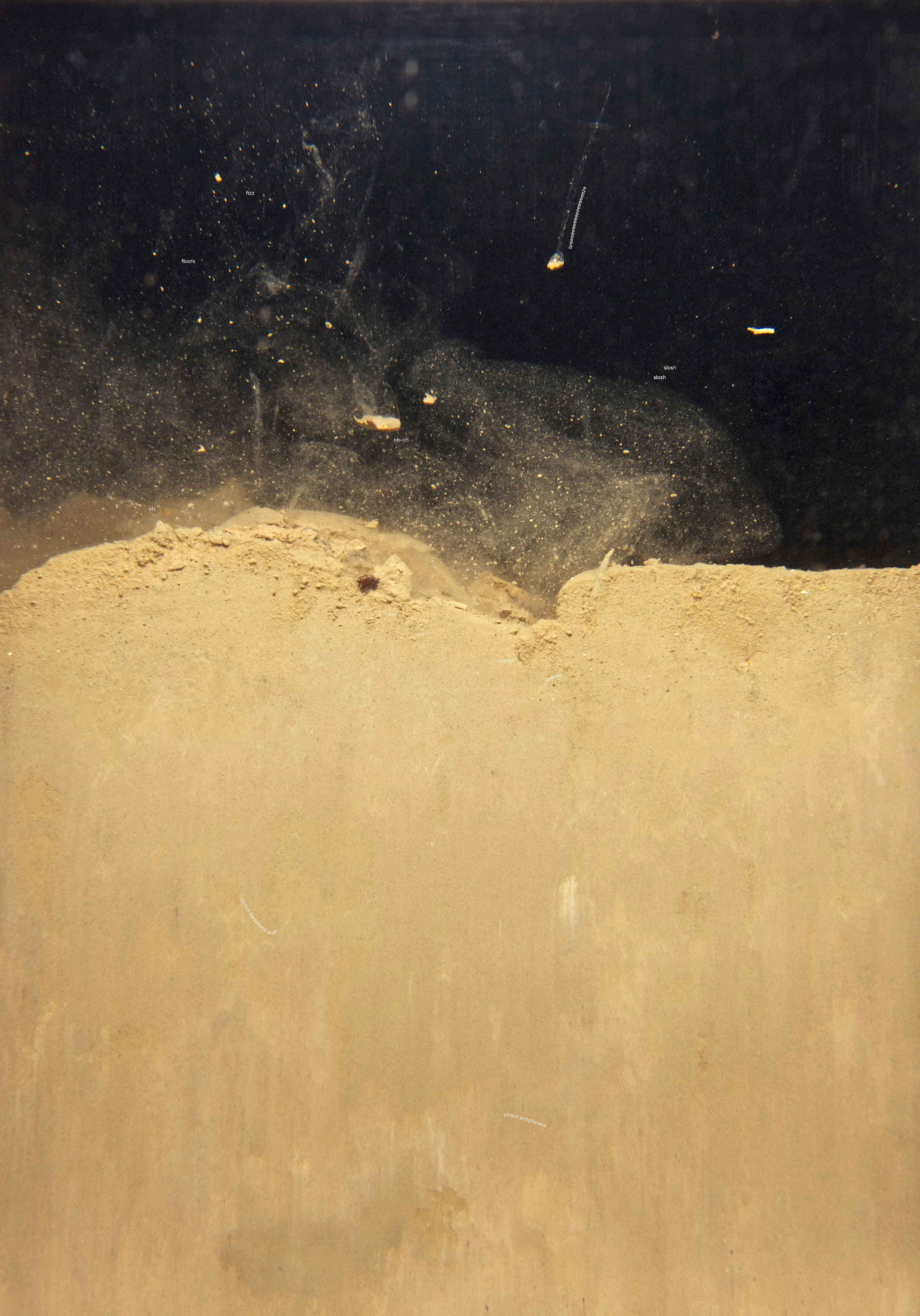
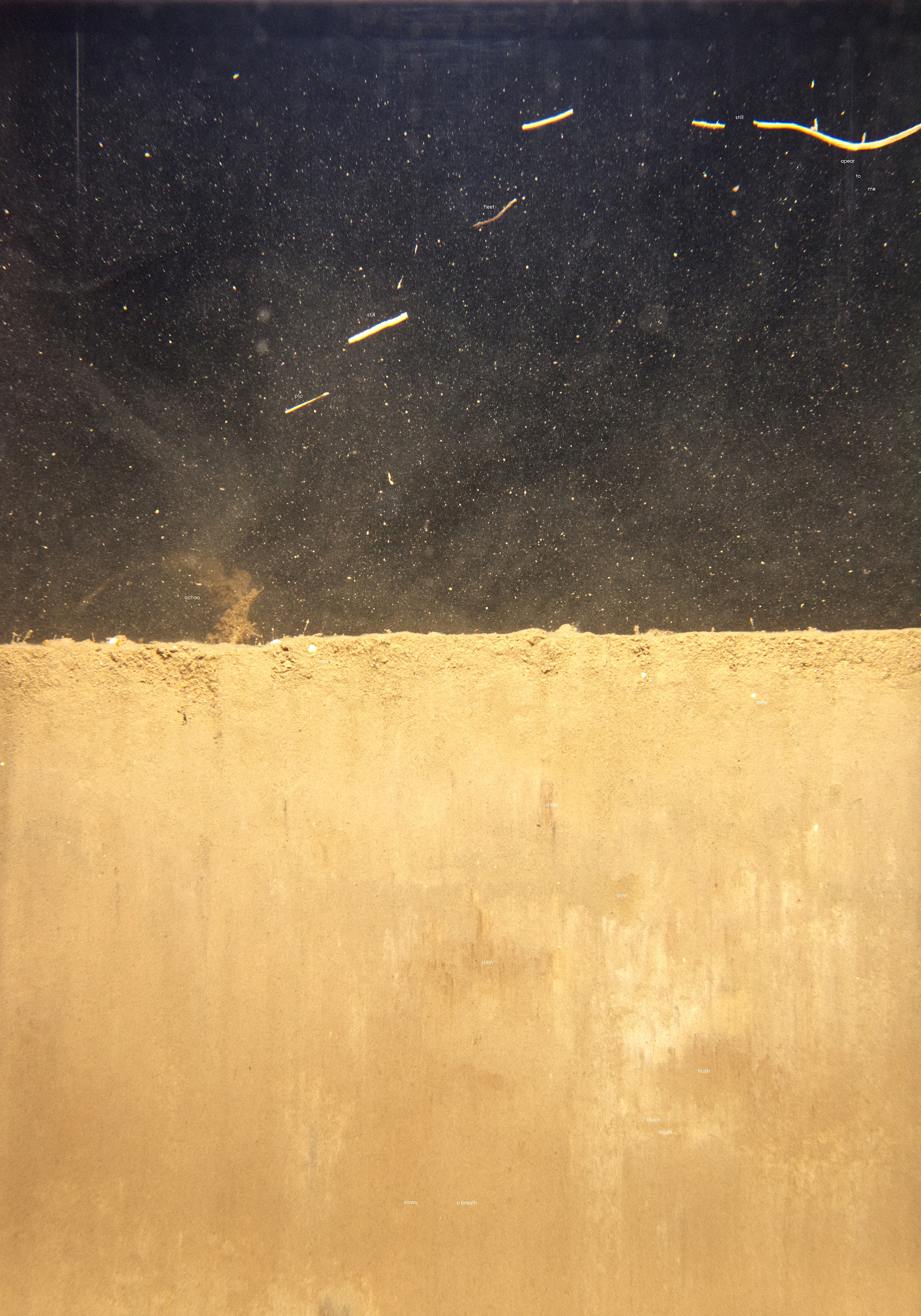
The work so uoo-op that sinks in emerges from the encounter of two recording forms: scientific imaging and performative poetry. Through their combination, a shared sensitivity to the moment is explored — to what suddenly appears and leaves traces.
At the center is the idea of making perceptible what usually remains unnoticed: minimal movements that carry fundamental life processes on the planet. Both the scientific device and the poetic structure operate in darkness — one on the seabed, the other in the sound of language — to reveal signs of activity that, although not always visible to the naked eye, leave material, sonic, or color traces.
The poems accompanying the images are inspired by the alliterative verse of Old English and Low German: an oral poetic form where rhythm is not based on syllabic meter but on the stress of root syllables, repetition of consonant sounds, and marked pauses that interrupt the flow of speech. Elements such as glottal stops (brief interruptions of airflow) and consonances create a broken, discontinuous, deeply physical sound structure. When read aloud, these poems are not only heard; they are breathed, penetrated, felt in the throat. This performative quality emphasizes the relation to the moment of capture — the sudden arrest of something in transition — which also defines the photographic gesture.
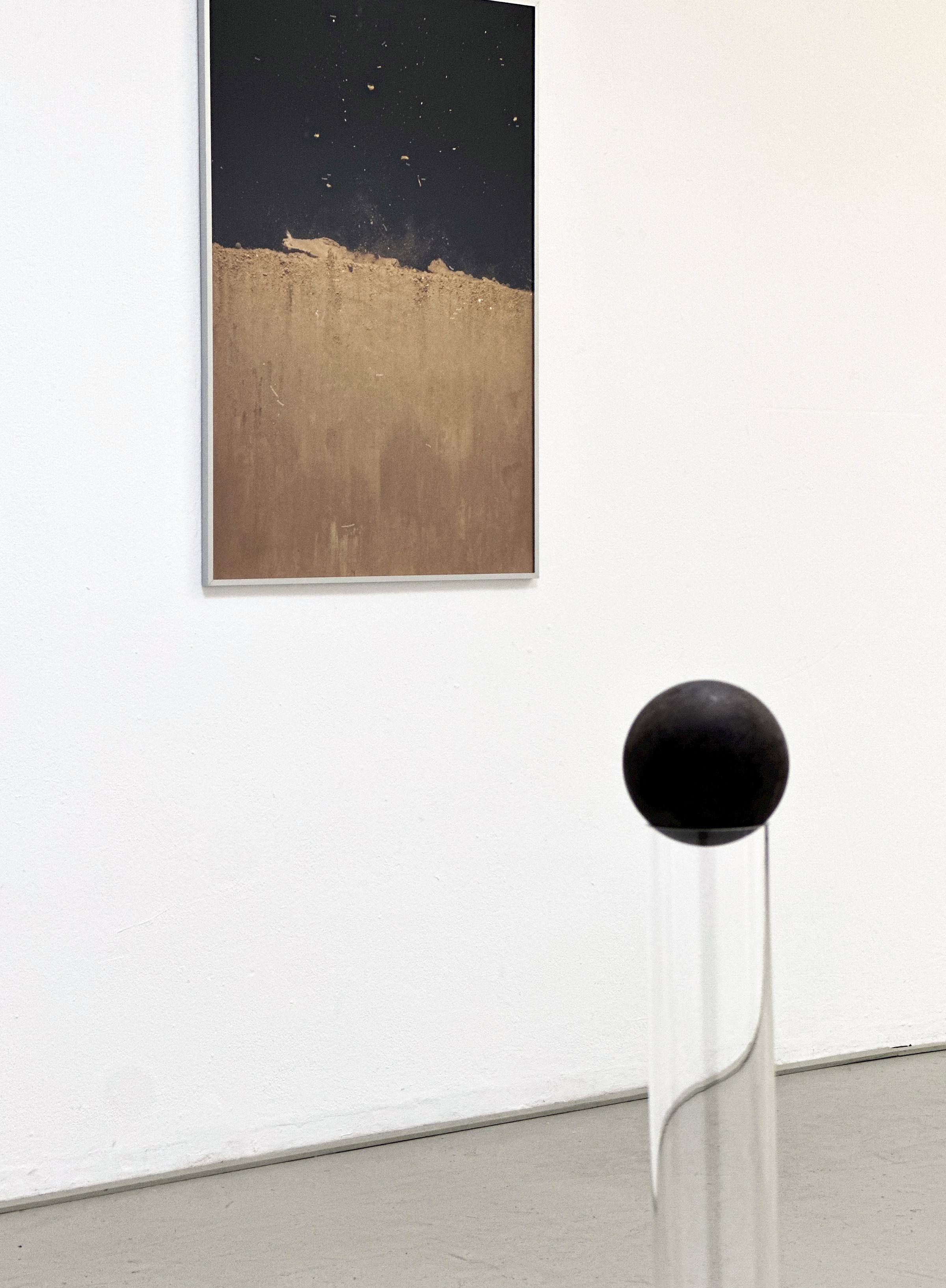
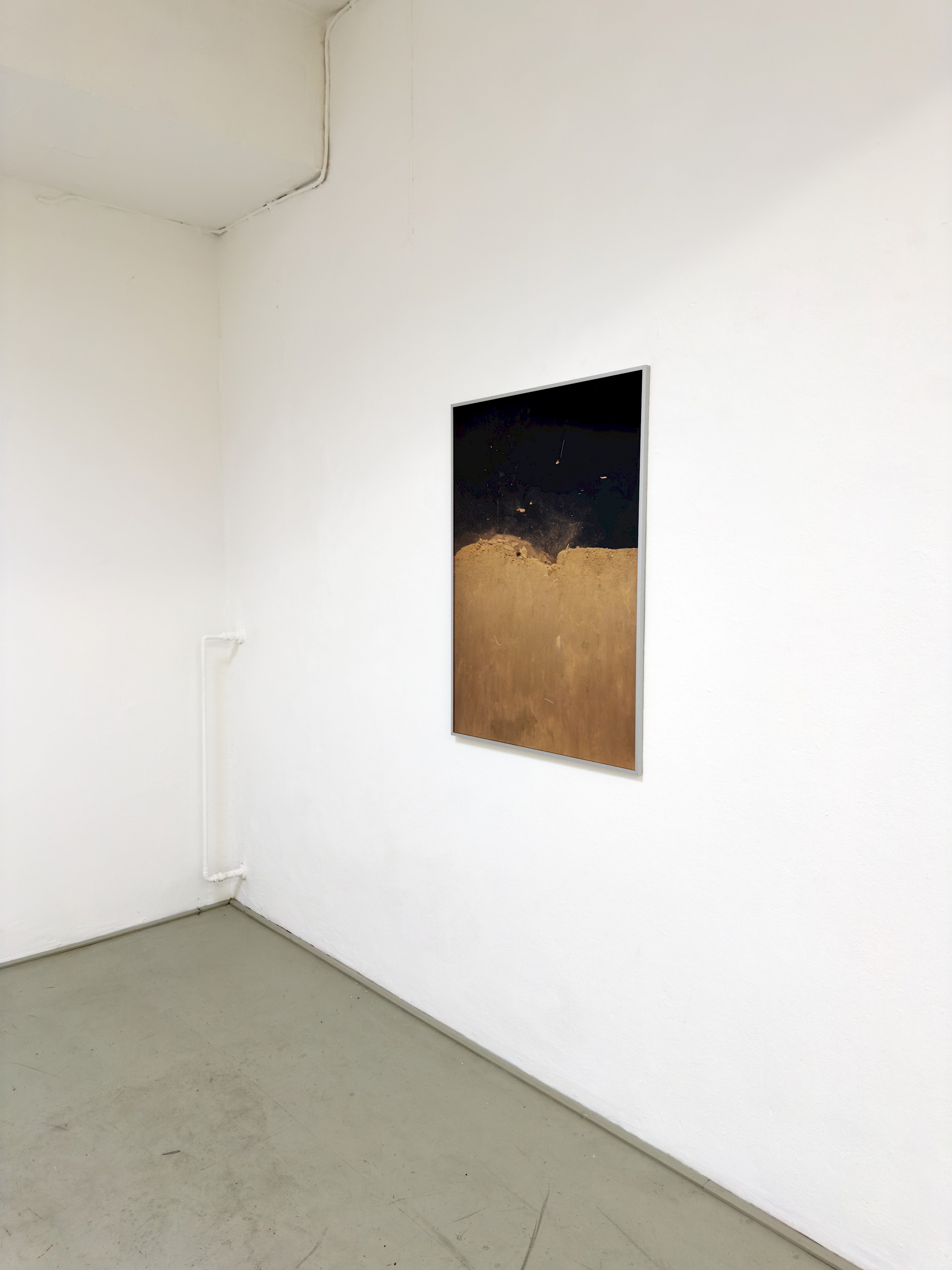
The images come from a series of shots taken with the SPI camera (Sediment Profile Imaging camera) during a campaign in the HAUSGARTEN area of the Arctic Ocean (Fram Strait, between Northeast Greenland and the Svalbard archipelago, at depths up to 5,500 meters). The method consists of inserting a glass plate into the sediment and photographing it through an angled mirror. The camera operates blindly, without direct visual transmission, and its contact with the ground is only detected by a brief tension release in the cable holding it. Each image is the result of a gamble, a descent without guarantees.
What appears in these images are not large visual discoveries but traces: small galleries dug by benthic organisms, burrows, color variations in the top centimeters of the seabed. These life forms, although barely visible, play a fundamental role in ecological balance: through their movements and digging, they aerate the sediment and transport organic material into deeper layers, enabling long-term carbon storage. This process — bioturbation — is crucial in the context of the climate crisis, as it regulates seabed respiration and its ability to absorb CO₂.
Like the poems, these organisms manifest not through their direct presence but through the changes they produce in their environment. The work thus brings into tension two movements: sinking, disappearing into the depths, and continuing existence through change, trace, and breath. Between word, image, and sediment, a listening opens for what carries life without being seen at first glance.
Images courtesy of Dr. Jennifer Dannheim, Deep-Sea Ecology and Technology Group, AWI.
Photography 70 x 100, 2025